

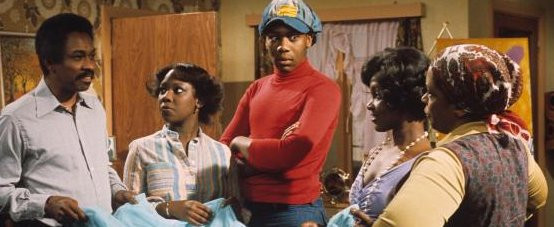
The Fosters
1976 - United KingdomOriginally promoted as a “sparkling new comedy series” about life in a typical South London Black family, The Fosters turned out to be anything but typical, new, or original.
Indeed, had it not been the first British sitcom to feature an entirely Black cast—and the first to give Lenny Henry a starring role—it is highly likely the series would have slipped quietly from public memory.
Its route to British television was, ironically, a roundabout one. The Fosters reached UK screens by way of Till Death Us Do Part. Johnny Speight’s sitcom about the bigoted Alf Garnett was sold to the United States and remade as All in the Family, which then spun off into Maude, which in turn produced Good Times—the show that ultimately became the template for The Fosters. When the American rights holders sold the format back to the UK, they insisted that the British version, with only light anglicising, use the original Good Times scripts. This proved to be the show’s undoing, as those scripts were never particularly strong to begin with.
Viewers expecting a sharp, socially barbed comedy in the vein of Till Death Us Do Part or All in the Family were left disappointed. Not only did the series fail to resonate with the audience it was clearly intended for, it also drew criticism for reinforcing racial stereotypes—a controversy that overshadowed the genuine talent of its cast, who deserved far better material.
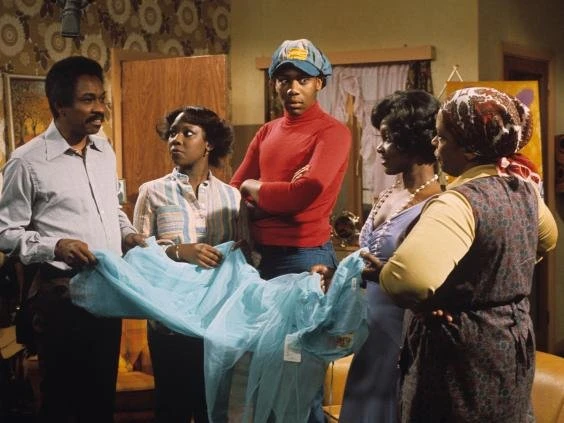
The Foster family consisted of easy-going father Samuel (Norman Beaton) and spirited mother Pearl (Isabelle Lucas), immigrants from Guyana who had built a life in a South London tower block at number 131. Against the odds, and constantly struggling to make ends meet, they raised their three children: artistic eldest son Sonny (Lenny Henry), teenage daughter Shirley (Sharon Rosita), and youngest boy Benjamin (Lawrie Mark). Their neighbour Vilma (Carmen Munroe), living at number 139, served as Pearl’s close friend and confidante.
For several members of the cast, brighter days lay ahead. Lenny Henry—who had first appeared on British television at 17 as an impressionist on New Faces—went on to become part of Three of a Kind before establishing himself as one of the country’s most successful and best‑loved comedy performers. Meanwhile, Norman Beaton and Carmen Munroe would later reunite, this time as husband and wife, in the far superior, award‑winning sitcom Desmond’s.
Seen this show? How do you rate it?
Seen this show? How do you rate it?
Published on December 13th, 2018. Written by Laurence Marcus for Television Heaven.


