

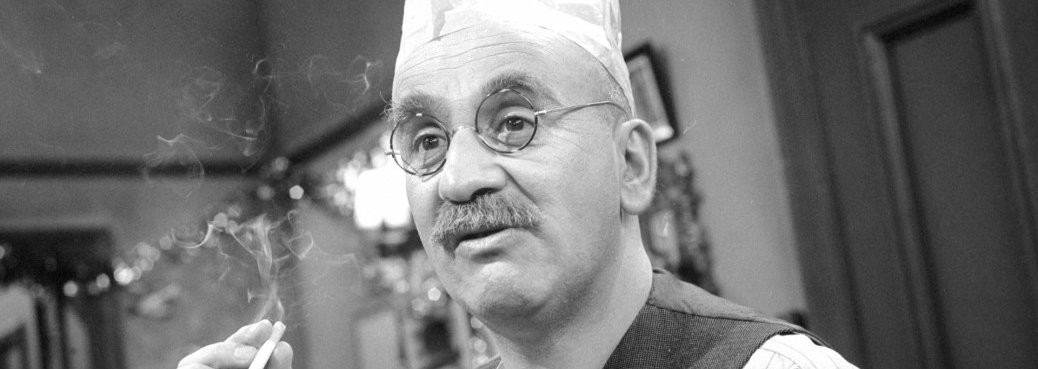
Till Death Us Do Part
1966 United KingdomBigotry, hatred, and the fear born of ignorance have plagued organised society for as long as humanity has existed. For nearly as long, comedy has served as a quietly powerful tool in challenging those prejudices, helping to guide more progressive generations toward recognising the ultimate futility of such destructive attitudes. In television, one of the earliest and most groundbreaking examples of this approach came from writer Johnny Speight, whose sitcom Till Death Us Do Part — and its unforgettable central character — would go on to achieve iconic status.
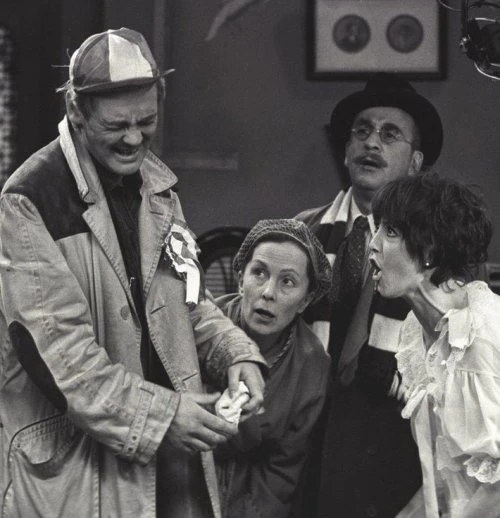
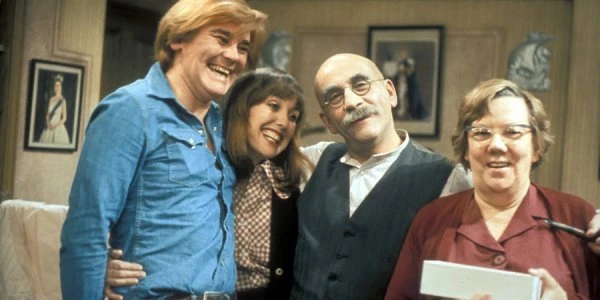
The origins of Till Death Us Do Part can be traced back to a 1965 episode of Comedy Playhouse, in which the family bore the surname Ramsey. The cast featured acclaimed character actor Warren Mitchell as Alf Ramsey — sharing the surname of the then England football manager — alongside Gretchen Franklin, who would later become well known to British audiences as Ethel Skinner in EastEnders, in the role of Elsie. When the full series launched in 1966, Dandy Nichols assumed the role of Elsie and quickly won over the nation with a performance of remarkable comic restraint. Through the slightest glance or expression, she could convey the weary frustration of a long-suffering wife enduring her husband’s foul-tempered, tedious outbursts more effectively than pages of dialogue ever could. Completing the central cast were former dancer turned actress Una Stubbs as Rita, Alf’s level-headed daughter, and Liverpudlian actor Tony Booth — once associated with the “Angry Young Men” movement and later known as the father of Cherie Blair, wife of former Prime Minister Tony Blair — as Rita’s husband, Mike.
Now renamed Garnett, Alf treated his family to a weekly diatribe on the ills of present day society, putting the blame squarely on the shoulders of the incumbent Prime Minister, Harold Wilson, the permissive society, and the high influx into the country of black immigrants. His hostility extended to his own family: Mike was dismissed as a “Scouse git,” Elsie as a “silly moo,” and whenever he found himself losing an argument, Alf would wrap himself in his West Ham scarf and retreat bitterly to the pub. The series generated widespread controversy and numerous complaints, particularly from church groups and self-appointed moral campaigner Mary Whitehouse, many of whom failed to recognise that Garnett was intended as a satirical embodiment of prejudice — a point brilliantly underscored by Mitchell’s commanding performance.
The original run continued until 1968 before returning in 1972. In 1975 however, Dandy Nichols departed the series — Elsie was written out as having gone to Australia to visit her sister — leaving Alf to redirect his narrow-minded fury toward neighbours Bert (Alfie Bass) and Min (Patricia Hayes). In 1981, a revised version of the programme moved from the BBC to ATV for a short-lived revival under the simplified title Till Death.... The character resurfaced again at the BBC in 1985 in the sequel series In Sickness and In Health. By then, Nichols’ health had significantly deteriorated, and she appeared largely in a wheelchair. The Garnetts had been relocated to a new housing development, while Rita and Mike had moved away. Una Stubbs returned occasionally, but Tony Booth declined involvement; his difficult relationship with Warren Mitchell was well known. To replace Mike as Alf’s chief adversary, the writers introduced Winston (Eamonn Walker), a gay black home-help who became the new target for Garnett’s antagonism.
In Sickness and In Health continued even after Nichols’ death in 1986. By that stage, however, British society had become noticeably more racially tolerant — ironically due in part to the influence of the original series itself — and the programme had consequently lost some of its edge and capacity to shock. The format was also adapted for American television, where it achieved enormous popularity in a toned-down (although most American's would disagree), though still controversial version titled All in the Family.
Through Speight’s deliberately provocative writing and Warren Mitchell’s masterful portrayal of Alf Garnett, British television produced a character who was as paradoxically repellent as he was strangely beloved. At its height, Till Death Us Do Part held a mirror up to some of the ugliest attitudes within British society. It challenged viewers, forced them to confront racial prejudice and intolerance, and, perhaps most importantly of all, made audiences laugh — not ‘in’ sympathy with its central figure, but ‘at’ the absurdity and ignorance of his deeply misguided bigotry.
Seen this show? How do you rate it?
Seen this show? How do you rate it?
Share on...
Published on February 7th, 2019. Written by Humar for Television Heaven.


