

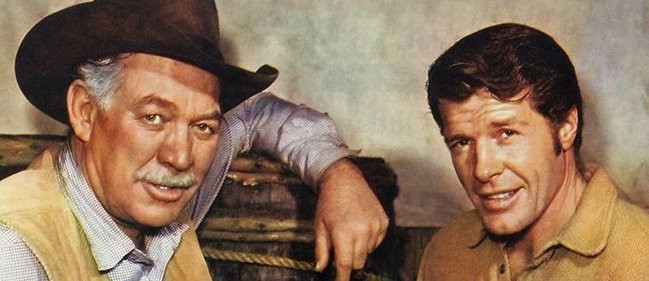
Wagon Train
1957 - United StatesFew television Westerns have left as enduring a legacy as Wagon Train, the ambitious, star-studded series that captured the imagination of audiences on both sides of the Atlantic throughout the late 1950s and early 1960s. Inspired by John Ford’s 1950 cinematic classic Wagonmaster, the show blended the visual sweep of the American frontier with intimate, character-driven storytelling that offered something new each week, setting the blueprint for countless anthology-style dramas to follow, including none other than Star Trek, whose creator Gene Roddenberry cited Wagon Train as a direct influence.
At its core, Wagon Train followed a group of 19th-century pioneers traveling from St. Joseph, Missouri to California. Their journey across deserts, mountains, and Indigenous territories served as a vivid backdrop for stories of endurance, hope, conflict, and redemption. Each episode introduced new guest characters — travellers with unique pasts and personal dilemmas — whose fates intertwined, often briefly and dramatically, with those of the wagon train.
Leading the train for much of the series was Ward Bond as the gruff yet steadfast Major Seth Adams, supported by Robert Horton as the dashing scout Flint McCullough. Horton’s exit in 1962, after growing weary of the Western genre, marked a turning point. His departure (only to turn up again in 1965 as the star of A Man Called Shenandoah) paved the way for Robert Fuller (fresh off Laramie) to take over as Cooper Smith, a capable replacement though the dynamic inevitably shifted. Meanwhile, Bond's sudden death in 1960 while filming on location was a major blow; his shoes were filled by seasoned actor John McIntire, who later cemented his Western credentials in The Virginian.
The guest star roster reads like a who's who of Golden Age Hollywood: Henry Fonda, Bette Davis, Clint Eastwood, Ernest Borgnine, Barbara Stanwyck, Mickey Rooney, James Coburn, and even John Wayne, who made his only dramatic TV appearance (uncredited) as General Sherman. Adding to the prestige, a young Ronald Reagan — future President of the United States — also made an appearance. These luminaries brought depth and gravitas to the rotating weekly tales, often outshining the main cast with their emotional arcs.
What made Wagon Train more than just another oater was its literary ambition. Writers such as Aaron Spelling, who would go on to become a television titan, wove in themes and storylines from classic literature like Great Expectations and Pride and Prejudice, while still leaning on traditional Western tropes; Indian raids, outlaw ambushes, and settler hardship, to maintain genre appeal.
The show’s peak came during its early black-and-white, 52-minute format. But in 1962, Wagon Train expanded to 90 minutes and transitioned to colour in an effort to stay fresh. Ironically, this attempt to modernize marked the beginning of its decline. The longer format diluted the pacing, and the novelty wore thin. Though the show soldiered on for three more years, the end felt inevitable.
Still, at its best, Wagon Train was a weekly morality play dressed in buckskin and wagon wheels — a unique blend of rugged Americana and timeless human drama. Its influence on serialized, guest-star-heavy storytelling is unmistakable, and its place in TV history is well-earned.
Seen this show? How do you rate it?
Seen this show? How do you rate it?
Published on February 11th, 2019. Written by Laurence Marcus for Television Heaven.


