

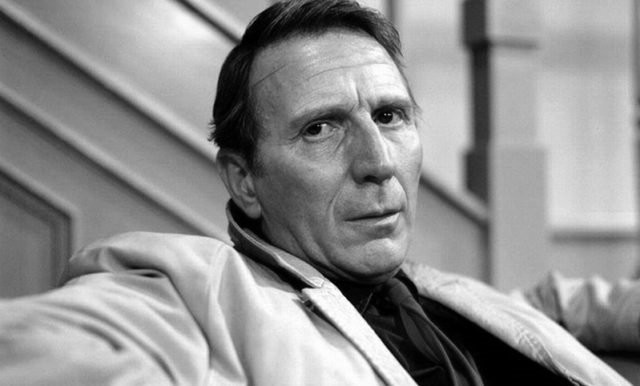
Public Eye
1965 - United KingdomReview: LM
Although almost forgotten today, Public Eye remains a remarkable and significant piece of British television history. Spanning a full decade from January 1965 to April 1975, the ABC/Thames drama series quietly carved a unique and important path between the slick, high-octane adventure fare of the 1960s and the grittier, more overtly violent action dramas that would soon follow in the 1970s – typified by the likes of The Sweeney. In doing so, Public Eye offered something refreshingly grounded and subtle: a melancholic, slow-burning look into the life of the down-at-heel private enquiry agent, Frank Marker.
Originally broadcast in black and white, the series introduced viewers to a world-weary but innately decent man, sensitively and consistently portrayed by Alfred Burke. From the outset, Burke had a firm grasp of how Marker should be realised – a far cry from the typical hard-nosed gumshoe. His insistence on renaming the character from 'Marvin' to 'Marker' exemplified his intent to create a more ordinary, more human, and ultimately more believable private detective. Marker is unmarried, solitary, and just scraping by in the unglamorous world of low-rent investigations, initially in London and later in Birmingham and Brighton.
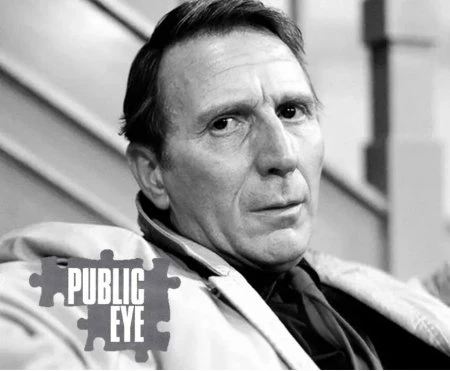
This quiet realism became Public Eye’s trademark. As Marker is moved from city to city – from the capital to a timber yard office in Birmingham, and then to the faded seaside bustle of Brighton – the essentials of his existence remain unchanged. He is a man out of step with both the criminals he investigates and the authorities who mistrust him. Yet his moral compass, though battered, remains true. In this, he recalls the principled yet disillusioned detectives of noir fiction, such as Raymond Chandler’s Philip Marlowe – or McGill from Man in a Suitcase, with whom he shares a similarly solitary path.
The conclusion of the third season – now tragically lost – saw Marker wrongly imprisoned, an event that marked a significant turning point in the series’ tone and structure. By the time he emerges in the fourth season, in 1969, the television landscape has shifted – not least behind the scenes, with the transition from ABC to the newly formed Thames Television. This change also brought a tighter episode count, but if anything, the show only grew in dramatic strength and character complexity.
With the introduction of a small but memorable supporting cast in the later seasons – including Pauline Delany’s Helen Mortimer, John Grieve’s compassionate probation officer Jim Hull, and Ray Smith’s gruff but intelligent DI Percy Firbank – Public Eye gained further texture and continuity. These characters never overshadowed Burke’s performance but provided a more layered and believable world for Marker to navigate.
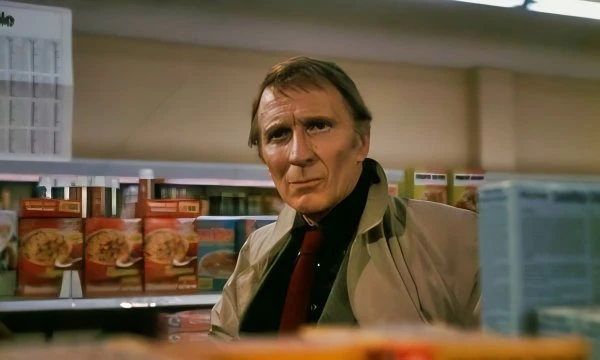
By the time the final episode aired in 1975, Public Eye had built a body of work that was both diverse in subject matter and unified in tone. It presented a rare, unvarnished view of a morally ambiguous world, peopled not with supervillains and action heroes, but with ordinary individuals struggling in the grey areas of life. It is perhaps this realism – unflashy but deeply affecting – that has led to its relative obscurity in a television landscape that tends to celebrate the bold and brash.
Yet, in its quiet way, Public Eye was revolutionary. With a deeply human lead performance from Alfred Burke, it offered a powerful counterpoint to the more flamboyant shows of its era. For those willing to seek it out, Public Eye remains a compelling and emotionally resonant exploration of a man trying to do good in a world where right and wrong are rarely clear-cut. It deserves to be remembered not just as a bridge between eras, but as a classic in its own right.
Seen this show? How do you rate it?
Seen this show? How do you rate it?
Published on March 18th, 2025. Written by Laurence Marcus for Television Heaven.


